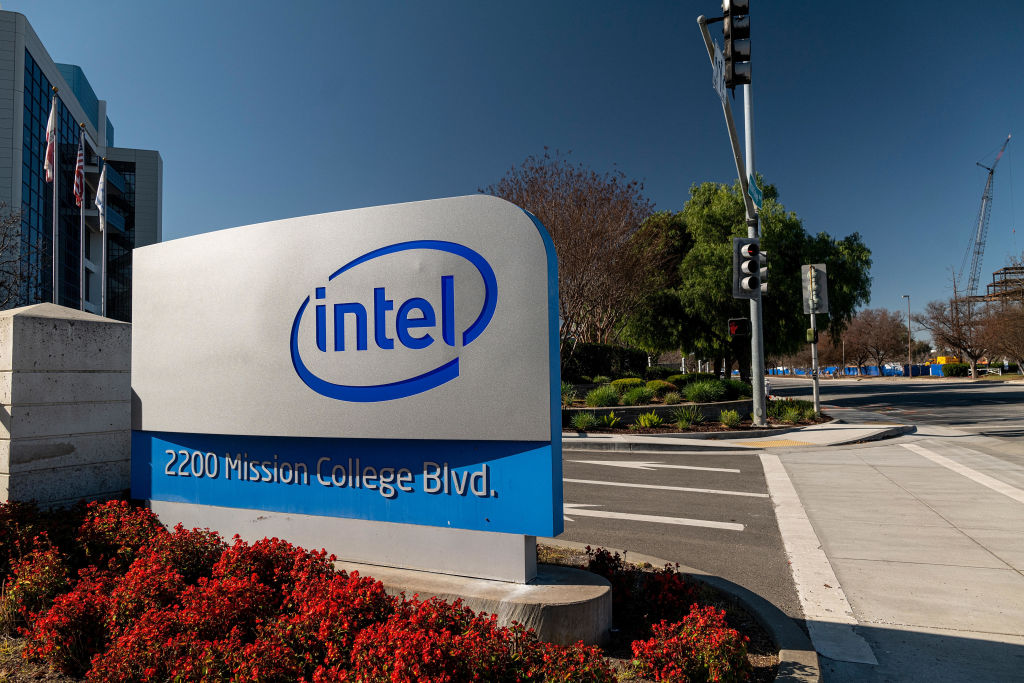
Intel has announced a key customer win and changes to its foundry business as the beleaguered chipmaker looks to execute a turnaround.
Intel is taking steps to transition its chip foundry division, Intel Foundry, to an independent subsidiary, Intel CEO Patrick Gelsinger said in a blog post. Intel Foundry’s leadership isn’t changing, and the subsidiary will remain inside Intel. But Intel Foundry will gain an operating board, including independent directors.
Gelsinger also said the company would pause its chip fabrication projects in Poland and Germany for two years “based on anticipated market demand,” and consider pulling back on its chip packaging and testing operations in Malaysia. Intel previously pledged to spend over $36 billion to build semiconductor factories in Magdeburg, Germany; $4.6 billion on a chip plant near the Polish city of Wrocław; and $7 billion on its Malaysia footprint.
But in a win for the foundry business, Gelsinger revealed that Intel has signed a deal with AWS to co-develop an AI chip using Intel’s 18A chip fabrication process. Intel has also agreed to produce a custom Xeon 6 processor for AWS, building on an existing partnership between the two firms.
“We have tripled our deal pipeline since the beginning of the year,” Gelsinger said of Intel Foundry’s business, describing the AWS deal as a “multi-year, multi-billion-dollar framework” that could potentially involve additional chip designs. He added that it “demonstrates the continued progress we are making to build a world-class foundry business.”
Intel’s cost-cutting and dealmaking — along with a newly awarded $3.5 billion contract to build chips for the Pentagon — sent the company’s stock soaring over 6% at market close. It’s a bright spot in Intel’s otherwise grim fiscal year.
In Q1, Intel posted a $437 million net loss — a loss that widened to $1.6 billion in Q2. Intel Foundry posted $5.3 billion in operating losses in H1, despite a slight year-over-year climb in revenue.
Join 10k+ tech and VC leaders for growth and connections at Disrupt 2025
Netflix, Box, a16z, ElevenLabs, Wayve, Hugging Face, Elad Gil, Vinod Khosla — just some of the 250+ heavy hitters leading 200+ sessions designed to deliver the insights that fuel startup growth and sharpen your edge. Don’t miss the 20th anniversary of TechCrunch, and a chance to learn from the top voices in tech. Grab your ticket before doors open to save up to $444.
Join 10k+ tech and VC leaders for growth and connections at Disrupt 2025
Netflix, Box, a16z, ElevenLabs, Wayve, Hugging Face, Elad Gil, Vinod Khosla — just some of the 250+ heavy hitters leading 200+ sessions designed to deliver the insights that fuel startup growth and sharpen your edge. Don’t miss a chance to learn from the top voices in tech. Grab your ticket before doors open to save up to $444.
Intel also reportedly lost out on a major customer, Sony, after failing to come to a chip manufacturing agreement for Sony’s next PlayStation console. That tie-up would’ve contributed $30 billion to Intel’s foundry business, according to Reuters.
This summer, Intel announced a $10 billion cost-reduction plan, which included laying off 15,000 staffers through separation and early retirement offerings. (Intel says it’s more than halfway through the process and expects to wrap up by the end of the year.) The chipmaker has also reportedly considered selling its autonomous driving arm Mobileye and its enterprise networking division.